Impact
Grounded in tradition. Committed to the future.
Our matcha travels from the fields of Uji, Japan, to your cup. A journey we're proud of, and one we take seriously when it comes to its environmental impact.
No greenwashing. No vague promises. Just a clear plan.
Where we stand
The Matcha League is part of Tea Bar, based in Baarn, the Netherlands. We operate from a climate-neutral certified building with 100% LED lighting, CO₂-controlled ventilation and consistent energy reductions year on year. Our Scope 1 and 2 emissions are minimal as a result.
Our real climate challenge? Shipping and supply chain. Matcha from Japan, deliveries across Europe. That's where our focus goes.
What we already do
100% organic certified matcha (SKAL NL-BIO-01) – better for the soil, better for the ecosystem.
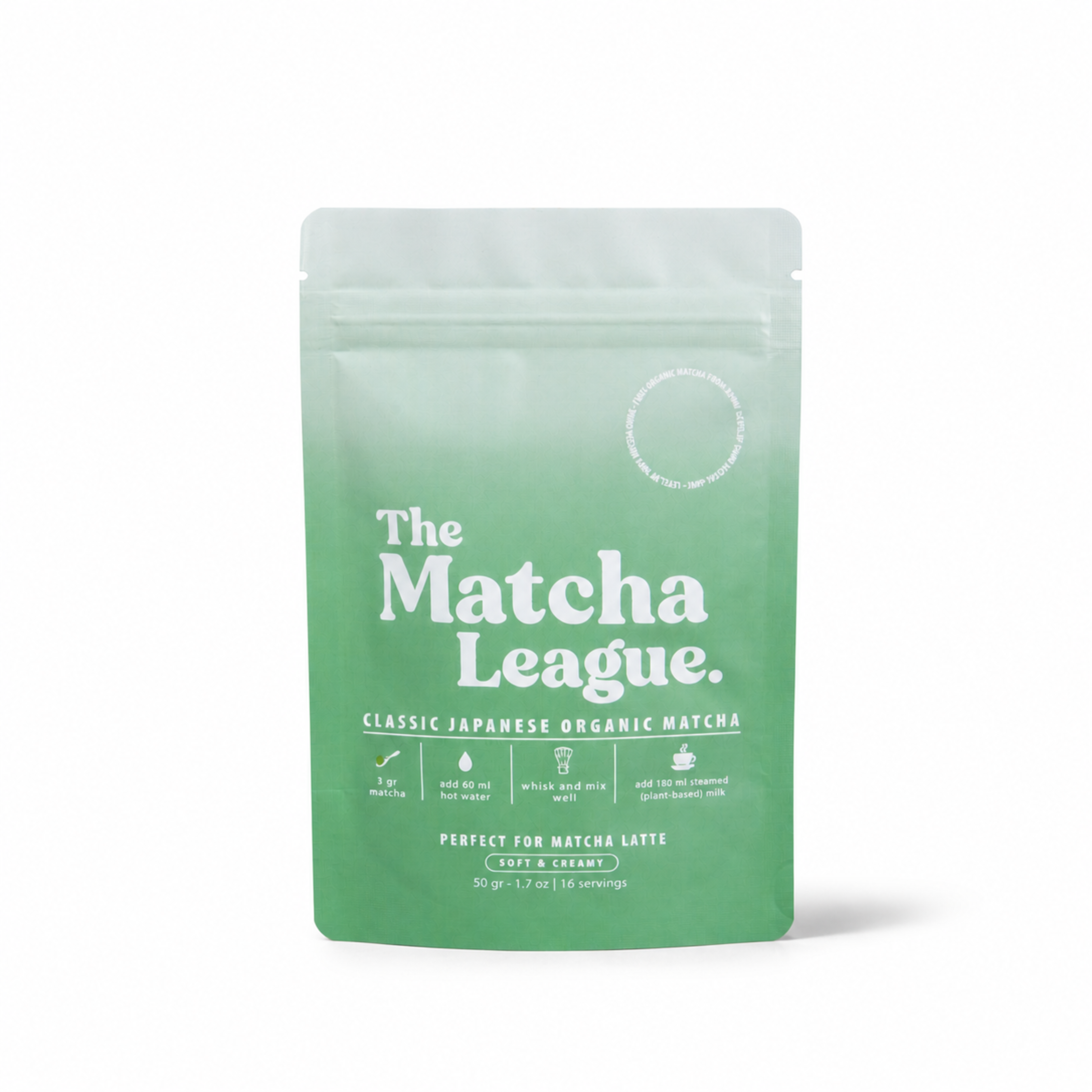
Recyclable mono-plastic pouches – clean separation, no mixed materials.
Biodegradable cornstarch packing peanuts – zero polystyrene.
Digital-first operations – no unnecessary print or paper.
Our targets
2026 – Measure. First full CO₂ measurement of all shipments via our fulfilment partner Monta and PostNL/DHL. You can't reduce what you don't measure.
2027 – Reduce. Switch to PostNL Sustainable Parcel where available. Start asking our suppliers, including our partners in Japan, what they already do on emissions and water management.
2028 – Report. Target: a 20% reduction in Scope 3 shipping emissions compared to our 2026 baseline.
Our commitment
We align with the 1.5°C pathway of the Paris Agreement and the SME Climate Hub framework. This page is updated every May with our actual progress.
Human rights
Everyone who touches our matcha, from farmer to fulfilment, deserves fair and safe treatment.
The Matcha League is small, but our supply chain isn't. Our matcha comes from Uji and Kakegawa, Japan. Human rights apply at every step of that journey, and we don't tiptoe around that.
No thick code of conduct. Just a clear commitment.
What we commit to
UN Guiding Principles on Business and Human Rights – the international baseline for how companies handle human rights.
Universal Declaration of Human Rights – the rights that apply to everyone, everywhere.
ILO Declaration on Fundamental Principles and Rights at Work – freedom of association, no forced labour, no child labour, no discrimination, and a safe workplace.
This is separate from, and in addition to, our Ethical Sourcing Criteria and supplier codes of conduct.
How we put this into practice
Our supply chain runs all the way to Japan, but it isn't anonymous. We've built a relationship with our matcha partners over 15 years, we work with certified producers (ISO 22000 and FSSC 22000) and we've personally visited the plantations. Every harvest is independently tested for pesticide residue by an accredited lab.
We review this statement every year, alongside our other policies.
Lobbying
We stay out of politics. Full stop.
The Matcha League doesn't lobby, and never has. We'd rather put our energy into great matcha and a fair supply chain than into influencing legislation or policy.
If that ever changes, we'll first work out a responsible lobbying policy and publish it here, before we start.
Questions about this?
Reach us at hello@thematchaleague.com.